blog / Tracking
How to measure AI visibility when the same prompt never gives the same answer twice
Updated October 29, 2026 · 7 min read · By the Selka research team
short answer
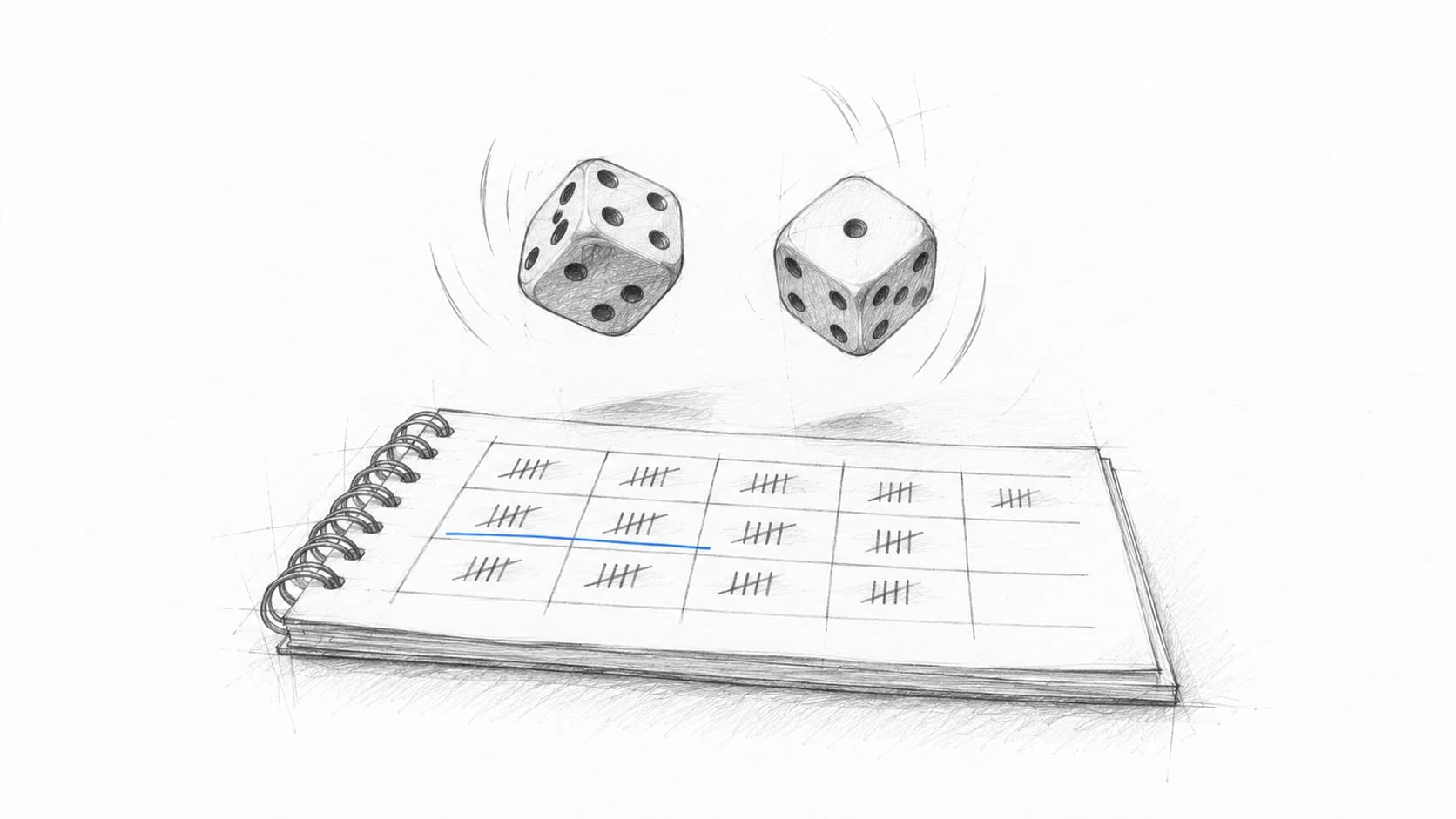
Measure a rate, not a rank. Ask the same buyer questions several times in the same setup and count how often you're named (your mention rate) and where you appear when you are. SparkToro and Gumshoe found less than a 1 in 100 chance that two runs return the same list of brands, so a single screenshot proves very little.
- Two runs of the same prompt almost never return the same brand list: under 1 in 100, per SparkToro and Gumshoe.
- The number worth tracking is your mention rate: how often you're named across many runs of your buyers' questions.
- Fix the words, the setup and the location, run each question 3 to 5 times, and repeat monthly.
- Mention rate doesn't show clicks. Add AI referrals, AI bot visits and a "how did you hear about us?" question.
Why AI never gives the same answer twice
Ask ChatGPT the same question 100 times and you'll almost never get the same list of brands twice. In SparkToro's study with Gumshoe, the chance of an identical list was less than 1 in 100. The same list in the same order was closer to 1 in 1,000. Three things drive it:
- The model.It doesn't look up one fixed answer. It picks from many it could give.
- The wording. Change one word in the question and you can vanish from the answer.
- The engine. ChatGPT, Perplexity, Gemini and Google answer the same question differently.
So “we rank #1 in ChatGPT” usually means someone checked once. AI visibility isn't a position. It's a rate.
The only number worth tracking
The useful number is your mention rate: out of every time a buyer question gets asked, how often are you named? Add your average position when you are. Across all your buyers' questions, that's your share of voice. It's keyword ranking for AI, measured over many runs instead of one.
SparkToro's study points the same way: the exact lists changed constantly, but how often certain brands appeared was much steadier. That steadier number is the one to watch.
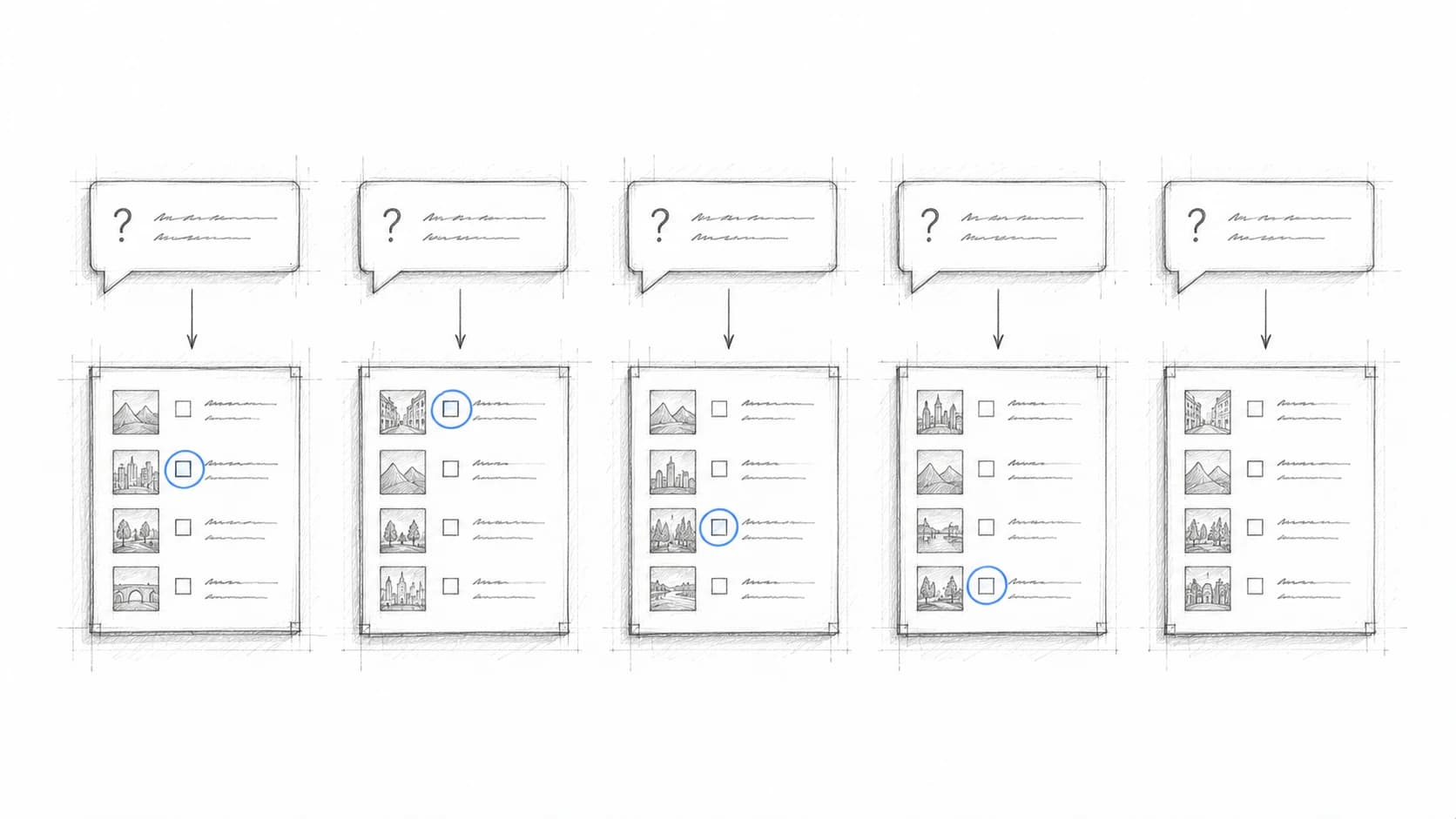
Our method, step by step
| Step | What to do | Why |
|---|---|---|
| 1. Same words | Copy each question exactly, every time | Change one word and it's a different test |
| 2. Same setup | Logged out, web search on, note the date and model | Settings change answers |
| 3. Same location | Fix your location, or run it from each market you sell in | Logged-out ChatGPT answers based on where you are |
| 4. 3 to 5 runs | Score brands by how many runs they appear in | One run is one roll of the dice |
| 5. Record everything | Brands in order, labels like "best value", prices, sources | Sources tell you why a brand shows up |
| 6. Repeat monthly | Same questions, same setup | One month is noise. Three months is a trend. |
Step 3 caught us out. Run from India, our budget questions came back in rupees, with Indian tools first. Step 5 matters most, because the sources are the part you can act on: they're the pages to get onto. We used this method for our test of 11 buyer questions.
What mention rate can't tell you
Mention rate shows whether AI talks about you. It doesn't show whether anyone clicks. Three signals help, and none is complete on its own:
- AI referrals.They show up in GA4 or Ahrefs Web Analytics. But some AI platforms don't pass referral data, so that traffic lands as direct. Treat referrals as an undercount, and check which pages AI sends people to.
- AI bot visits.AI crawlers read your pages far more often than people visit them. Bot analytics, like Ahrefs' on Cloudflare, shows which pages they read.
- “How did you hear about us?” People often hear about you in AI, then search your name or type your URL later. That never shows up as AI traffic, so ask them in your signup or checkout.
Together these get close. Alone, each one misleads.
The question to ask instead
Stop asking whether you rank in ChatGPT. Ask how often you show up across your buyers' questions, and whether that number is going up. Selka's AI tracker is built around this: every number shows how many runs it's based on. Read our methodology for the details.
Sources
- Search Engine Journal: AI recommendations change with nearly every query (SparkToro)
- Selka research: our buyer prompt tests, October 8 to 9, 2026
Facts checked October 29, 2026. See all of our findings on the research page.