blog / Prompt research
AI prompt volume: why every number is an estimate, and what to use instead
Updated October 19, 2026 · 7 min read · By the Selka research team
short answer
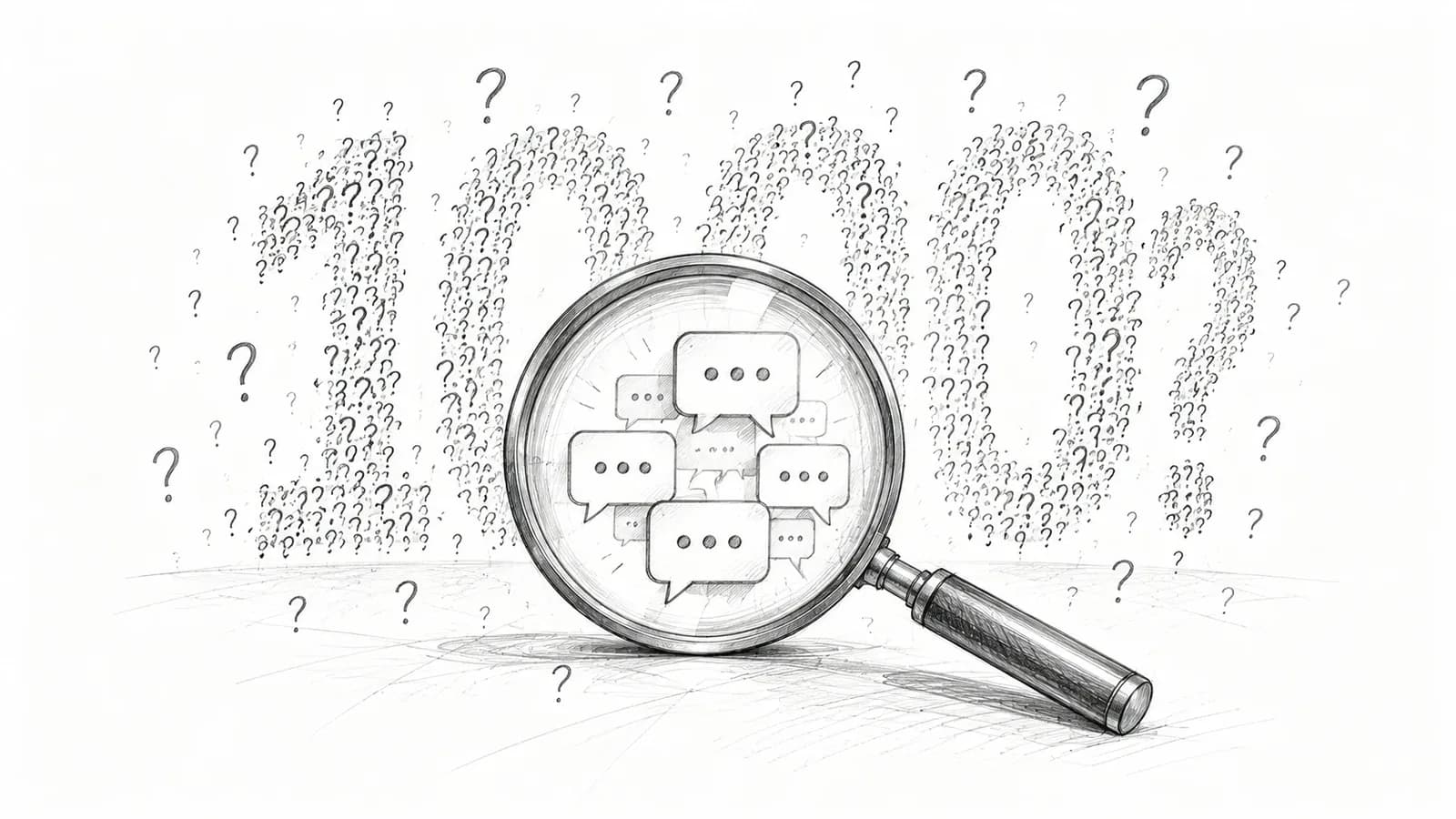
AI prompt volume is an estimate, not a measurement. ChatGPT, Perplexity and Google don't publish prompt data, so tools model it from small browser panels or from Google search volume. Use it as a rough hint at most. To choose what to work on, use the real search demand behind a topic, the buying intent of the question, and your own tracking.
- No AI platform shares prompt data. Every volume number is modeled.
- Panels see far less than 1% of ChatGPT's ~2.5 billion daily prompts, then scale up.
- Only about 2% of ChatGPT messages are about buying products, so volume says little about buyers.
- Pick topics by search demand plus buying intent, then track a few real questions over time.
Why nobody has the real number
ChatGPT, Perplexity, Gemini and Google AI Overviews don't share prompt data.There is no AI version of Google Keyword Planner. So when a tool shows “1,200 prompts a month” for a question, that number was built, not counted.
The only first-party AI query data today comes from Bing. Its Webmaster Tools AI Performance report shows the searches Microsoft Copilot ran to find your pages. That's useful, but it's one assistant, your own site only, and it shows Copilot's rewritten searches, not what people typed.
How AEO tools estimate prompt volume
Every tool uses one of four methods, or a mix:
| Method | How it works | The catch |
|---|---|---|
| Consumer panels | Buy logs of real AI chats from people who opted in, often through browser extensions, then scale up. | A tiny, biased slice: mostly desktop Chrome, no mobile apps. |
| Clickstream | Similar raw data, grouped into topics instead of single prompts. | Same small sample, so niche topics are mostly noise. |
| Google volume × a ratio | Take the Google volume of the closest keyword and multiply by a platform ratio. Ahrefs uses 0.115 for ChatGPT. | It's Google demand with one multiplier for every topic. |
| Black-box models | A proprietary model with no inputs shown. | You have to take the number on trust. |
Where the number breaks
The sample is tiny
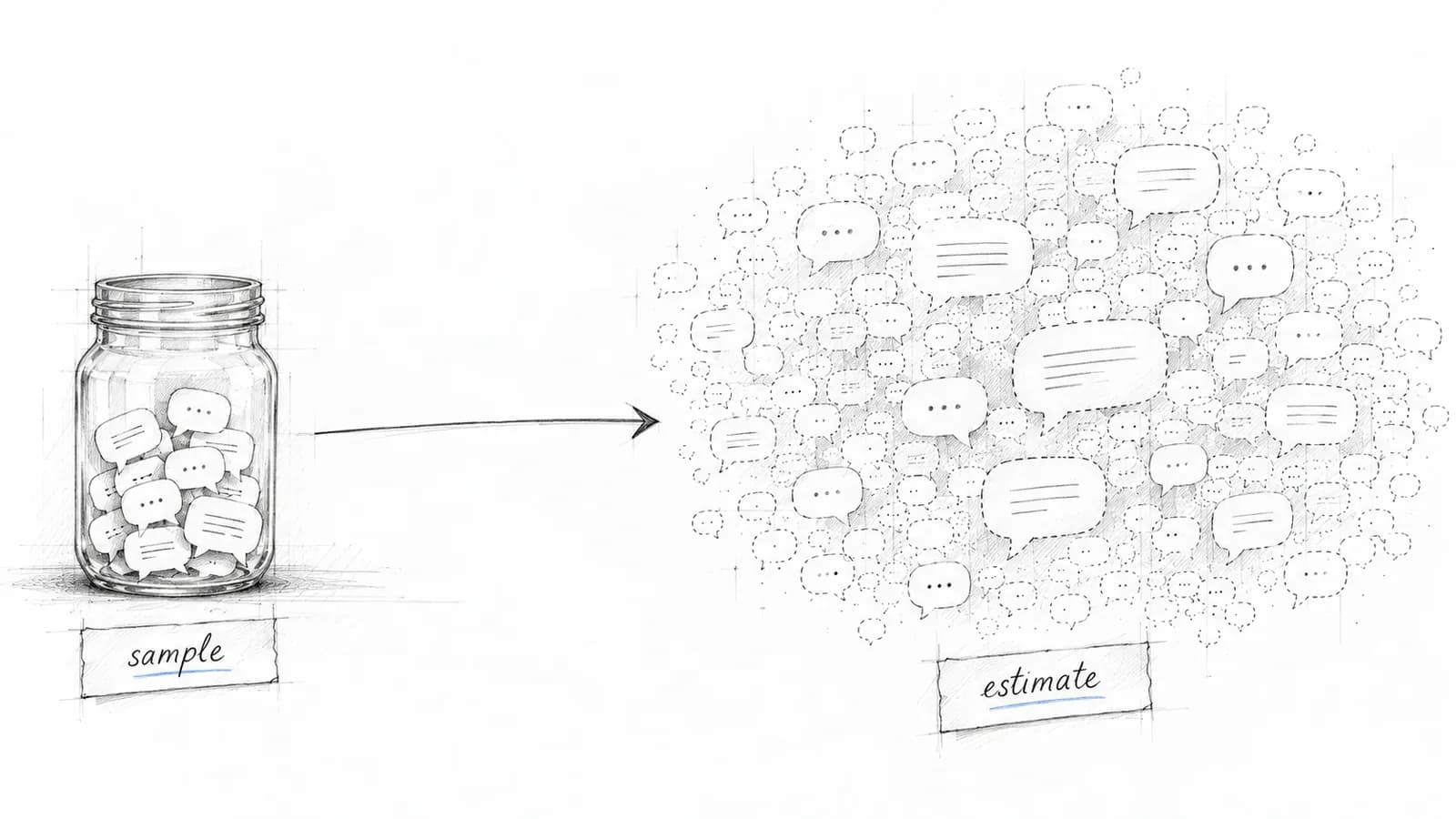
ChatGPT gets roughly 2.5 billion prompts a day. Conductor estimates the panels behind prompt volume see far less than 1% of that. A long-tail B2B question might appear twice in the panel. Scale that by 100 and you get a confident “200 a month” that is mostly noise.
Volume isn't buying intent
OpenAI's own study of about 1.1 million conversations found that only about 2% of ChatGPT messages are about buying products. Most use is guidance, information and writing. “How do I write a cold email” has huge volume and close to zero buyers. A big number on its own tells you little.
Answers change from run to run
Even the outcome you're trying to predict is unstable. SparkToro and Gumshoe found the same prompt returns the same list of brands less than 1 time in 100. So precise demand numbers sit on top of answers that move every time.
What to use instead
- Search demand behind the topic. AI assistants run web searches before many answers (called query fan-out). Real keyword data for the topic is measured, not modeled, and it moves with what people ask AI.
- Buying intent.Rank questions by how close they are to a sale: “best X for Y” and “X vs Y” beat “what is X”.
- Winnability. A young site wins specific questions before broad ones. Start where you can actually be named.
- Your own tracking. Pick 7 to 8 real buyer questions per topic and track them across many runs. Watch whether AI starts naming you, not a volume estimate.
This is how Selka works: it scores each topic cluster on demand, fit, intent and winnability, and shows the formula on the methodology page. You can see the research behind it in our findings.
Sources
- Conductor: Debunking AI prompt volume (July 2026)
- Ahrefs: How Ahrefs estimates AI search demand (Aug 2026)
- NP Digital: Prompt volume shouldn't drive strategy (2026)
- OpenAI and NBER: How People Use ChatGPT (Sept 2025)
- Search Engine Land: AI recommendation lists rarely repeat
Facts checked October 19, 2026. See all of our findings on the research page.